
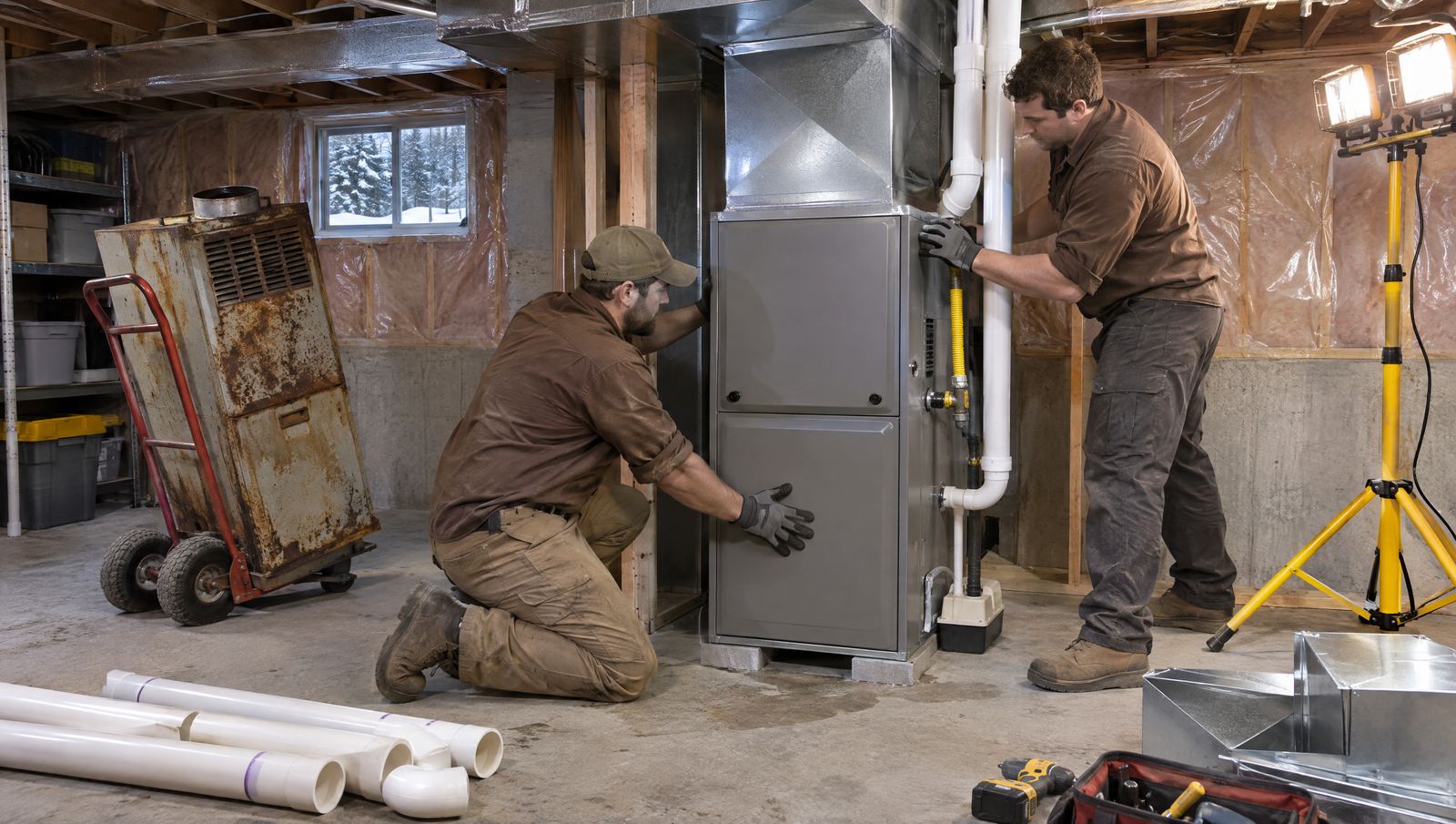
Furnace replacement in Bloomington, MN
Most furnaces we replace were sized by rule of thumb, and many are far bigger than the house needs. We size the new one the way the Minnesota energy code asks: a room by room heat loss calculation for a -15°F night, equipment chosen to match it, and ducts checked so the heat reaches the upstairs bedrooms. Then we pull the permit with your city.
- Room by room heat loss calculation, written down
- Repair and replace priced side by side
- City mechanical permit pulled by us
Tell us about the furnace you have
We usually answer the same day, and within the hour when a house has no heat.
No heat and someone at home is elderly, unwell or very young? Call or text now: 952-555-0163
Sized to your house at -15°F, not to the old furnace
The usual way to replace a furnace is to read the label on the old one and install the same size. That carries every old mistake forward. If the old furnace was oversized when it went in, or the house has had new windows, insulation or a finished basement since, the new one will be wrong too.
We start from the house. Minnesota's residential energy code (Minnesota Rules 1322) gives the Twin Cities a winter design temperature of -15°F and asks for heating equipment sized with ACCA Manual S from a Manual J or ASHRAE load calculation. It also caps oversizing: heating equipment no more than 40 percent above the calculated load, cooling no more than 15 percent. We measure the rooms, the windows and the walls, work out the heat loss floor by floor, and choose a furnace and a blower that fit it.
What it changes: often a smaller furnace than the one coming out, longer and quieter run times, and upstairs bedrooms that stay within a degree or two of the kitchen.
“Our upstairs bedrooms ran ten degrees colder than the kitchen every January. Kari measured the airflow at every register, found two supply runs that had come apart in the basement ceiling and a return that was too small for the second floor. She sealed and rebalanced it. The furnace we were about to replace is still running.”
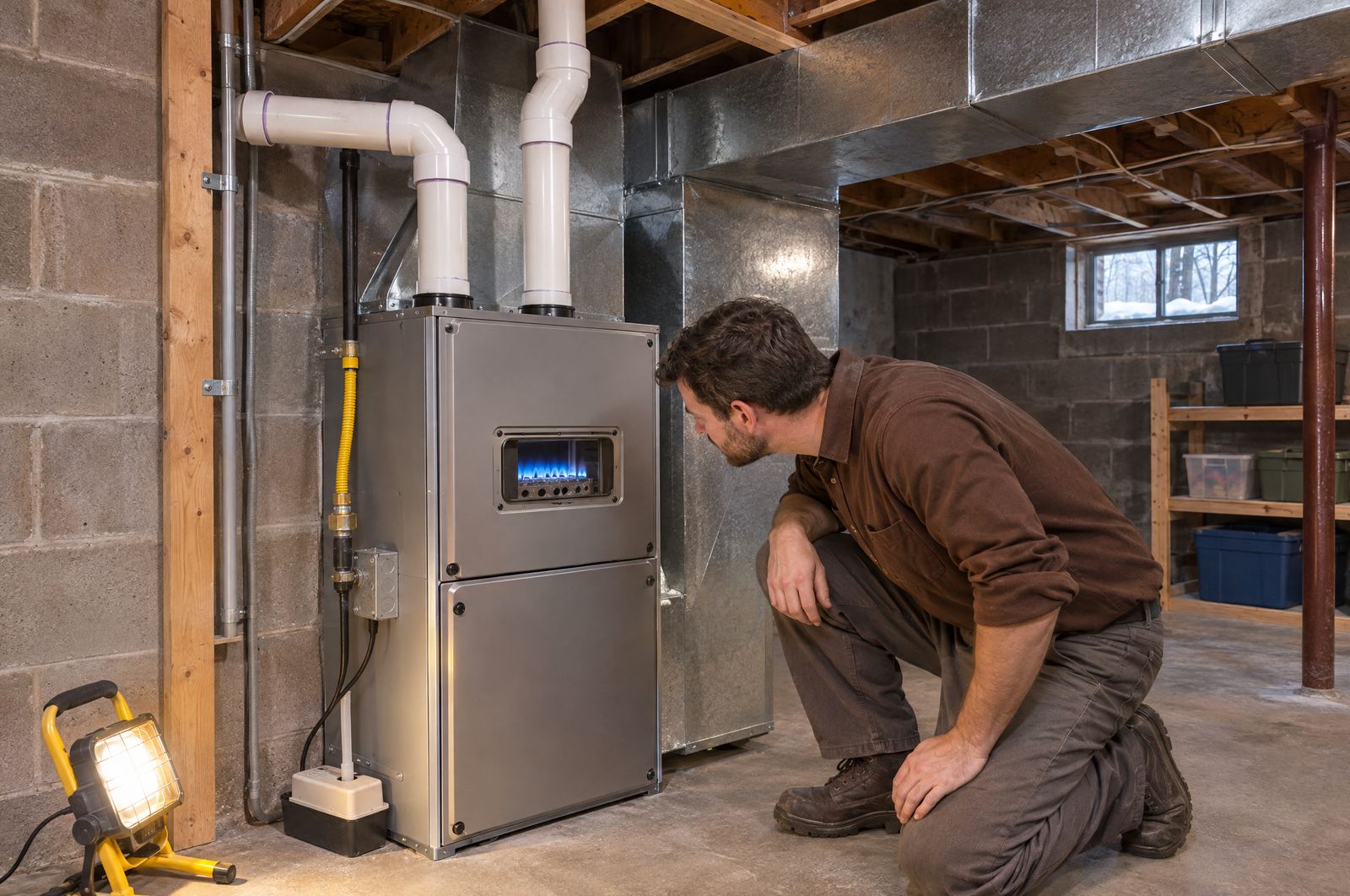
How a replacement goes
We measure the house.
Rooms, windows, walls, attic and basement, and the airflow at every register.
We write the numbers down.
The heat loss at -15°F, the furnace size it calls for, and repair and replace prices side by side.
We pull the permit.
Your city issues the mechanical permit; we file it and schedule the inspection.
We install and check every floor.
Gas, venting and the condensate drain, then the temperature at the registers upstairs and down.
Repair or replace: how we weigh it
We look before we price. These are the things that move the answer, and which way they usually push it.
| What we find | Leans toward | Why |
|---|---|---|
| Worn ignitor, flame sensor or inducer on a sound furnace | Repair | Replaceable parts; the furnace has years left |
| Cracked heat exchanger | Replace | A safety problem, and on an older furnace the repair rarely pays |
| Furnace far larger than the heat loss | Replace when it fails | A right-sized furnace heats the floors more evenly |
| Repeated repairs in the last few winters | Talk it through | We show what the next repairs are likely to be |
| Rooms cold but furnace healthy | Neither | Usually ducts or returns; see duct sealing and balancing |
| Want to cut gas use | Consider a heat pump | A cold climate heat pump can carry most of the winter with the furnace as backup |
What a North Wren furnace replacement includes
The same list on every job, written on the quote.
The heat loss calculation
Room by room at -15°F, on paper, so you can see why we chose the size we did.
Venting done right
PVC intake and exhaust run to the side wall high enough to clear drifting snow, away from windows and the gas meter.
A condensate drain that will not freeze
Routed to a floor drain or a pump inside the heated space.
Airflow checked
Static pressure and the temperature at registers on each floor, so the new furnace is not fighting the ducts.
Carbon monoxide test
At the furnace and near the bedrooms, after the new furnace is running.
The permit
Filed with your city and inspected. We are bonded with the Minnesota Department of Labor and Industry as the state requires.
The numbers a Twin Cities furnace is sized for
-15°F
Winter design temperature for Minneapolis and St. Paul
Minnesota Rules 1322, residential energy code
40percent
The most a furnace may be oversized above the calculated load
Same section of the code
7,399degree days
Heating degree days in a normal year at MSP
NOAA 1991 to 2020 normals
Furnace replacement around the south metro
We drive out from Bloomington. Every town has its own page with the drive, the houses we see there and the office that issues the permit.
Richfield
About 5 miles from the office, under 10 minutes. Small postwar houses with bedrooms tucked under the roof.
Burnsville
About 6 miles across the river, 8 to 15 minutes. Houses on the Minnesota River bluffs.
Edina
About 8 miles, 10 to 15 minutes. Ranches under bur oaks and large remodels.
Minneapolis and Eden Prairie
About 12 miles each way, 18 to 30 minutes. Old city houses to the north, newer two-story houses to the west.
The owner does the load calculation
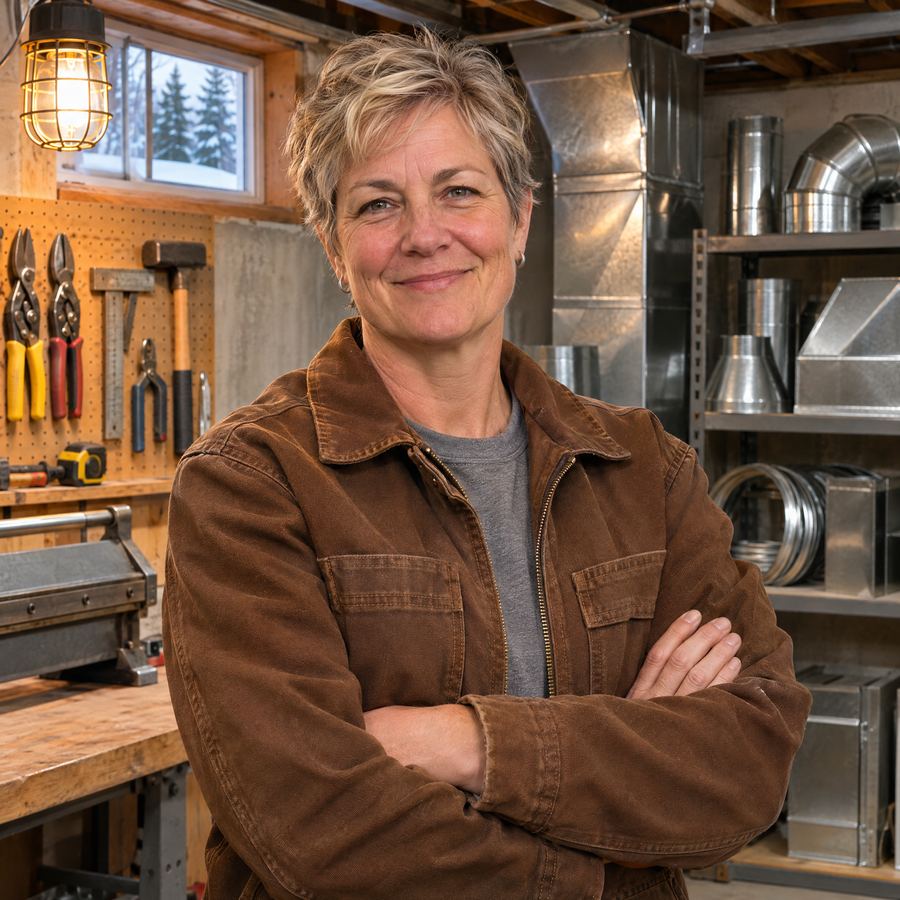
Kari Lindgren, owner and lead technician
Kari answers the phone, does the load calculation and writes the price. You deal with her from the first call to the last check of the bedrooms.
Book a heating visit
We usually answer the same day, and within the hour when a house has no heat.
No heat and someone at home is elderly, unwell or very young? Call or text now: 952-555-0163
Furnace replacement questions we hear most
How do you decide what size furnace I need?
With a heat loss calculation, room by room: the walls, windows, ceilings and basement of your house, how tight it is, and the design temperature for the Twin Cities, which Minnesota's residential energy code sets at -15°F. The code then asks for equipment chosen from that load with ACCA Manual S and limits heating oversizing to 40 percent above the calculated load. We give you the calculation on paper.
My old furnace is huge. Is bigger not safer in a Minnesota winter?
Not really. An oversized furnace heats the air near the thermostat fast, shuts off, and starts again, so the far rooms never catch up and the parts wear out sooner. Many older houses have been tightened up over the years with new windows and insulation, so they need less heat than they did. A furnace sized to the house runs longer, steadier cycles and keeps the floors closer together.
Should I repair my furnace or replace it?
We price both. The age of the furnace, what it has needed lately, the condition of the heat exchanger, and what a new one sized to the house would cost and save. A cracked heat exchanger on an older furnace usually tips it to replace. A worn ignitor on a sound furnace does not. See furnace repair.
What efficiency should a new furnace be?
The national minimum for a new gas furnace today is 80 percent AFUE. Most furnaces we install in the Twin Cities are high-efficiency condensing furnaces that vent through white PVC pipe. A 2023 federal rule would raise the minimum to 95 percent, but its start date is under review, so we size and price to what fits your house rather than to a date.
Is there a rebate or a tax credit?
The federal 25C tax credit ended for equipment placed in service after December 31, 2025, so a furnace installed in 2026 does not qualify. CenterPoint Energy runs a Residential Heating System Rebate Program for qualifying furnaces installed in 2026. We check whether your furnace qualifies on the day we quote and fill in the dealer part of the form. We do not promise an amount.
Do I need a permit to replace a furnace?
Yes. Every city we work in issues a mechanical permit for a furnace replacement, and some require their own contractor license as well. We pull the permit. Each town page names the office.
Tell us about the furnace you have
Tell us its age if you know it, what it has needed lately, and which rooms run cold. We bring the calculation sheets to the visit.
Book a replacement quote
We usually answer the same day, and within the hour when a house has no heat.
No heat and someone at home is elderly, unwell or very young? Call or text now: 952-555-0163