
Furnace tune-ups and maintenance plans in Bloomington, MN
A fall furnace check before the first cold snap, and a spring AC check before the first hot week. Each one is the same written list, including a carbon monoxide test at the furnace and near the bedrooms. Book them one at a time or on a plan that puts you first in line when it turns cold.
- Fall furnace check with a carbon monoxide test
- Spring AC check with the coil cleaned
- Plan members first in line on no-heat days
Book a fall or spring check
We usually answer the same day, and within the hour when a house has no heat.
No heat and someone at home is elderly, unwell or very young? Call or text now: 952-555-0163
What each check covers
The same written list every time, so you can compare one year with the next.
Fall furnace check
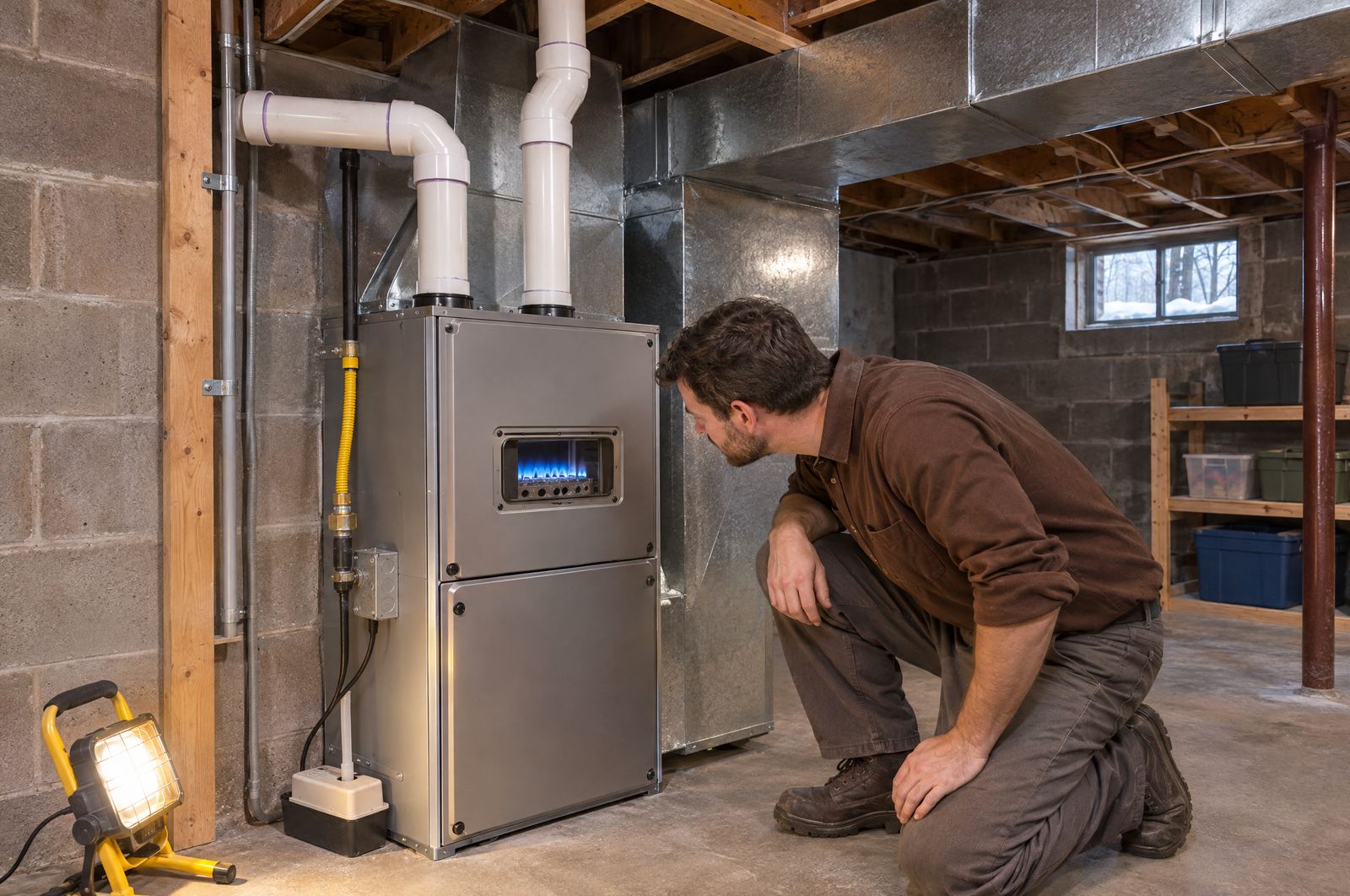
Burners and flame, ignitor, flame sensor, inducer, pressure switch, limit switch, gas pressure, venting and condensate drain.
Carbon monoxide test
At the furnace and near the bedrooms, plus a look at your CO alarms and their dates.
Airflow
Filter, blower, static pressure and the temperature at registers on each floor.
Spring AC check
Capacitor, contactor, fan motor, refrigerant pressures, and the condenser coil cleaned of cottonwood and dust.
Outside the house
Vent pipes clear and high enough above the snow line, the outdoor unit level and draining.
What we write down
Every reading, what we would watch, and anything that needs a repair priced before we do it.
Why the fall check matters most here
A furnace in the Twin Cities works hard. The airport averages 7,399 heating degree days a year (NOAA 1991 to 2020 normals), and on the coldest stretches it can run almost without stopping. In February 2021 the airport recorded twelve straight days with a low at or below zero, four of them with a high at or below zero too.
Parts that are close to failing usually fail in the first real cold, when the furnace goes from short cycles to long ones. A flame sensor that is starting to coat, an ignitor with a hairline crack, an inducer motor that has started to whine: all of them can be found in October and replaced on a weekday, instead of found at six in the morning in January.
What it changes: fewer no-heat mornings, and a written record of how your furnace is aging.
“No heat at six in the morning, minus 14 outside. The flame sensor was coated and the furnace kept locking out. She cleaned it, checked the venting and had the house warming by eight. No sales pitch.”
How a plan works
You join by phone or form.
We tell you the cost on the phone and book the next check.
We call you each fall and spring.
Before the first cold and before the first heat.
We check, clean and write it down.
The same list every time, readings included.
You go first on the busy days.
No-heat and no-cooling calls from members are answered ahead of new calls.
A year of maintenance in the Twin Cities
| When | What | Why |
|---|---|---|
| September to October | Fall furnace check and CO test | Before the first hard cold and the busy week that follows it |
| Monthly, October to April | Check the filter yourself | A clogged filter is a common cause of overheating and lockouts |
| After every big snow | Clear the vent pipes and the heat pump | Drifts can block the intake and exhaust |
| April to May | Spring AC check | Before the first hot week, after the coil has sat all winter |
| June | Look at the outdoor coil | Cottonwood fluff mats on the coil in early summer |
What a Twin Cities furnace does in a year
7,399degree days
Heating degree days in a normal year at MSP
NOAA 1991 to 2020 normals
72days
With a high at or below freezing
NOAA 1991 to 2020 normals
12days
Straight with a low at or below zero, February 2021
NOAA station records for MSP
What you can do between visits
Four things take a few minutes and save a lot of service calls.
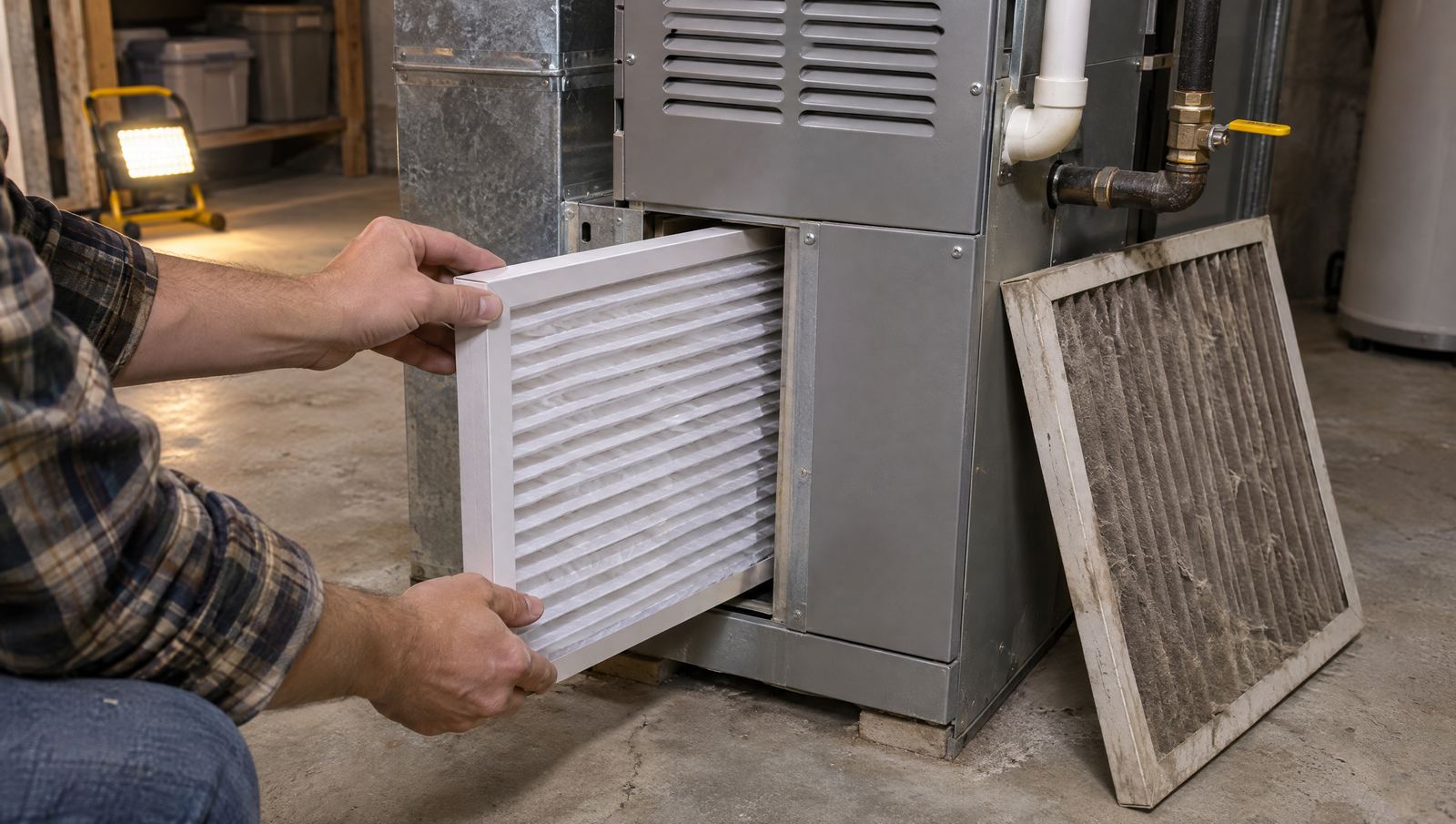
Check the filter monthly
From October to April. Write the date on the frame when you change it.
Keep the pipes clear
After a big snow or a windy night, check that the two white vent pipes on the side wall are not buried or frosted shut.
Keep the floor drain open
A high-efficiency furnace drains water all winter. A blocked floor drain or a full condensate pump shuts it down.
Test the CO alarms
Press the test button each month and replace alarms by the date printed on the back.
Furnace tune-ups around the south metro
We drive out from Bloomington. Every town has its own page with the drive, the houses we see there and the office that issues the permit.
Richfield
About 5 miles from the office, under 10 minutes. Small postwar houses with bedrooms tucked under the roof.
Burnsville
About 6 miles across the river, 8 to 15 minutes. Houses on the Minnesota River bluffs.
Edina
About 8 miles, 10 to 15 minutes. Ranches under bur oaks and large remodels.
Minneapolis and Eden Prairie
About 12 miles each way, 18 to 30 minutes. Old city houses to the north, newer two-story houses to the west.
The owner does the checks

Kari Lindgren, owner and lead technician
Kari answers the phone, does the load calculation and writes the price. You deal with her from the first call to the last check of the bedrooms.
Book a heating visit
We usually answer the same day, and within the hour when a house has no heat.
No heat and someone at home is elderly, unwell or very young? Call or text now: 952-555-0163
Maintenance questions we hear most
When should I book a furnace tune-up?
September and October, before the first hard cold. Minneapolis averages about 72 days a year with a high at or below freezing (NOAA 1991 to 2020 normals), and the first cold snap is when weak parts fail and every company is booked. A furnace checked in early fall gets through that week.
What does Minnesota law say about carbon monoxide alarms?
Minnesota Statutes 299F.51 requires an approved, working carbon monoxide alarm within ten feet of every room used for sleeping, in every single-family home and every unit of a multifamily building. Approved means certified to UL 2034. On every fall check we test the air at the furnace and near the bedrooms and tell you if an alarm is missing or past its date.
How often should I change the furnace filter?
Check it monthly in the heating season. A one-inch pleated filter usually lasts one to three months; a four- or five-inch media filter usually lasts longer. Pets, a remodel or a dusty basement shorten that. A clogged filter is one of the most common reasons a furnace overheats and shuts itself off. See furnace repair.
Do heat pumps need maintenance too?
Yes, and twice a year makes sense because a heat pump works in both seasons. We check the outdoor coil, the defrost operation, the refrigerant and the stand or bracket that keeps it above the snow. See cold climate heat pumps.
What do plan members get?
Both checks each year booked for you in fall and spring, and your no-heat or no-cooling call goes ahead of non-members on the busy days. We tell you what the plan costs on the phone; we do not put prices on this site.
Book a fall or spring check
Tell us the age of the furnace and the AC or heat pump if you know them, and when it was last checked.
Book a check
We usually answer the same day, and within the hour when a house has no heat.
No heat and someone at home is elderly, unwell or very young? Call or text now: 952-555-0163